Sunday, March 27, 2016

Holding on Lightly (John 20:1-18, Easter Sunday)


Early on the first day of the week, while it was still dark, Mary Magdelene came to the tomb and saw that the stone had been removed from the tomb.  So she ran and went to Simon Peter and the other disciple, the one whom Jesus loved, and said to them, “They have taken the Lord out of the tomb, and we do not know where they have laid him.”  Then Peter and the other disciple set out and went toward the tomb.  The two were running together, but the other disciple outran Peter and reached the tomb first.  He bent down to look in and saw the linen wrappings lying there, but he did not go in.  Then Simon Peter came, following him, and went into the tomb.  He saw the linen wrappings lying there, and the cloth that had been on Jesus’ head, not lying with the linen wrappings but rolled up in a place by itself.  Then the other disciple, who reached the tomb first, also went in, and he saw and believed; for as yet they did not understand the scripture, that he must rise from the dead.  Then the disciples returned to their homes.

But Mary stood weeping outside the tomb.  As she wept, she bent over to look into the tomb; and she saw two angels in white, sitting where the body of Jesus had been lying, one at the head and the other at the feet.  They said to her, “Woman, why are you weeping?”  She said to them, “They have taken away my Lord, and I do not know where they have laid him.”  When she had said this, she turned around and saw Jesus standing there, but she did not know that it was Jesus.  Jesus said to her, “Woman, why are you weeping?  Whom are you looking for?”  Supposing him to be the gardener, she said to him, “Sir, if you have carried him away, tell me where you have laid him, and I will take him away.”  Jesus said to her, “Mary!”  She turned and said to him in Hebrew, “Rabbouni!” (which means Teacher).  Jesus said to her, “Do not hold on to me, because I have not yet ascended to the Father.  But go to my brothers and say to them, ‘I am ascending to my Father and your Father, to my God and your God.’”  Mary Magdelene went and announced to the disciples, “I have seen the Lord”; and she told them that he had said these things to her.


I remember family beach vacations as a small child – maybe 3 or 4 years old – when I would scoop up a handful of sand and carry it back to where my family was sitting, and by the time I got there, the sand was mostly gone.  So, determined, I would trek out again, and hold the sand even tighter than I had before, and was disappointed to find that I’d still lost it.  I did the same thing trying to carry handfuls of ocean water, each time, with the same results.

Have you ever tried to hold on tightly to something, only to have it slip through your fingers?  When that happens, our instinct may be to hold on tighter, only causing it to slip through fingers all the more rapidly.


The scripture we’ve just read is John’s account of the Easter story.  Perhaps you noticed a curious little detail in the story, in which the risen Christ tells Mary Magdelene not to hold onto him.  I invite you to hold onto that little detail this morning.  May we pray.


Maybe you’ve heard the story of the little girl who went to church for the first time, and it happened to be Easter Sunday.  Her parents picked her up after Sunday School, and said, “Well, what did you learn?” She said, “Aliens came from outer space and lived for awhile on the earth.  God is one of those aliens, and when we die, we go to live forever in a spaceship with him.”


Her parents said, “Is that really what they taught you?”


She said, “No, but if I told you what they really said, you would never believe me.”


John’s Gospel begins the Easter story with a solitary figure walking through the darkness, filled with fear, uncertainty, and grief.  While it was still dark, Mary Magdelene went to a tomb because earlier in the week, Jesus – her teacher, her Lord, her friend – had been executed.


Mary arrives at the tomb, and she’s startled to find that it’s empty.  We’ve read the story, and we know why.  Jesus has left the building!  But the characters don’t know that.  They’re not thinking of resurrection.  They’re wondering who took Jesus’ body away, and why?  Was it grave robbers?  Body snatchers?  Had the authorities come and moved the body in the middle of the night to an undisclosed location?


The characters in the story didn’t know, as we do, that it’s Easter Sunday.  All they know is that the body of Jesus is missing, and it’s too much to take.  One final insult on top of injury, and Mary bursts into tears as she peers into the empty tomb.  She asks the angels who are sitting in the tomb where Jesus is, and she is so upset, it doesn’t even register in her mind that she is talking to angels – real, honest-to-goodness-God’s-messengers-to-earth-dressed-in-white-glowing-halo-whole-bit – angels.


She turns to leave the tomb, and in the cool of that still-dark morning, she bumps into a man she supposes to be the gardener, and, through her sobs, she says, “Sir, if you have taken him away, please, just tell me where you’ve put him.  Please . . .  Please  . . .”


Sometimes in our darkest days, we can’t find hope.  Yet, God moves even in the darkness.  The gardener just says one word, “Mary . . .”  And when, out of the darkness, we hear our name called, we recognize the One who stands before us – the crucified One is the risen One, he who died now lives again.


Friends, Easter begins in the dark, but thanks be to God, it doesn’t stay there.

And here, where Mary goes to embrace Jesus in her joy, he says those curious words: “Do not hold onto me.”  Why?  Simply put, Mary is reaching for things as they used to be. But resurrection is not a restoration to the way things were before. When Jesus says, “Do not hold onto me,” it is as if he is saying, “Mary, don't hold onto the way I was in the past, because everything is different now. There's no going back to the way it was before. The hope I give you is not about turning back the clock—it is about transforming your life from here on out.”


Mary was trying to hold onto good old days that lay behind her, unaware that the best days with Jesus actually lay ahead of her, and Jesus was calling her to reach, with faith, toward a future that was brighter than her past. 


It has been 18 years since I graduated from high school – Class of ’98, baby, Powercat Pride!  That means we are two years away from our 20th reunion, and some of my classmates, bless their hearts, have started a Facebook group for the reunion.  They’ve been posting photos and sharing memories, which is all well and good, but I’ve realized in seeing those posts, that mentally, emotionally, socially, I think some of them are still in high school.  Don’t get me wrong.  I enjoyed high school.  I’m still in touch with a handful of close friends.  I look forward to seeing people at the reunion.  But I don’t want to re-live those days.  I don’t want to go back there. 1998 isn’t coming back – and the more tightly they hold onto those glory days, the less able they are to live in the now, let alone step with boldness into a future that could be, and should be, brighter.


We can do the same thing in our faith – holding onto our glory days so firmly that what could be a promising future slips through our fingers.  We can become so convinced our best days are behind us that we stop looking for good days ahead of us, and so pine for yesterday that we mortgage tomorrow.


Craig Barnes put it this way: He said, “What we long for, what we miss and beg God to give back, is dead. Easter doesn’t change that. So we cannot cling to the hope that Jesus will take us back to the way it was. The way out of the darkness is only by moving ahead. And the only person who can lead the way is the Savior. But not the old Rabbi we once knew, which is only one more thing that has to be left behind. Until we discover a new vision of the Savior, a savior who has risen out of our disappointments, we’ll never understand Easter.”


Resurrection is not simply a fancy word that explains why the tomb was empty. Resurrection is the experience of the presence of the risen Lord! More than just the realization that Jesus has somehow defeated death for himself, resurrection is the promise that conquered death so that we might have life, and have it abundantly. He conquered death, not just so we could know that death isn't the last chapter in his story; he conquered death so that you and I can rest confidently that death and darkness and pain and sorrow and confusion and despair are not the last words in our own stories—that through the risen Christ the last words of our stories are words of divine love that conquers all.


Resurrection is a central belief to our faith, and yet, there are a great many people of faith who live as if the resurrection never happened.  Their lives aren’t transformed by the presence of the risen Christ, and they’re still stumbling around in the darkness, holding onto grudges and hurts and sins and negativity, all manner of self-destruction and spiritual dead ends.


So long as we hold onto these things, they keep a hold on us.  But friends, today is Easter; because of the resurrection, we need not allow those things to maintain their hold on us.  It’s a great day to let those things go and turn toward new life in Christ. And so, if you’ve come today and you’re holding onto grudges, behavior, attitudes that are less than Christ-like, or


If you’ve come today and you’re holding onto guilt, regret, or shame from something in your past,


Whatever it is that you’re holding onto that’s got a hold on you and is keeping you from experiencing the joy of walking in the new life Jesus invites us into, today is a great day to let go of all that is holding you back, so you can follow the risen Christ down the path
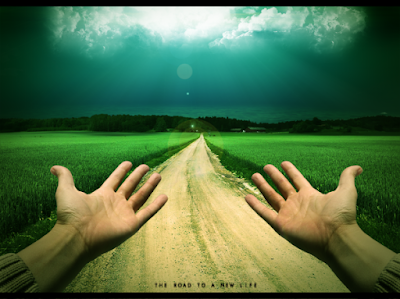
of new life.


The Easter story begins in the dark.  But thanks be to God, it doesn’t end there.   Mary was never the same after the resurrection.  An encounter with the Risen Christ changes us.  It always does.


Today’s the day for new life in Christ.  The hope of resurrection is not only for Jesus, it’s for all of us who follow him, too.  Jesus is out of the tomb; no need for us to hang out in there, anymore.


No need to keep holding on to what has been.  The risen Christ stands before us today, with a better offer: what is yet to be.  Let’s not hold onto our past so tightly that our future slips through our fingers.  Jesus has left the tomb and stepped into new life.  Whaddya say we go with him?

Sunday, March 20, 2016

Footsteps of Jesus into the Holy City: From "Hosanna!" to "How Dare You?!?" (Luke 19:29-42)


29 As Jesus came to Bethphage and Bethany on the Mount of Olives, he gave two disciples a task. 30 He said, “Go into the village over there. When you enter it, you will find tied up there a colt that no one has ever ridden. Untie it and bring it here. 31  If someone asks, ‘Why are you untying it?’ just say, ‘Its master needs it.’” 32 Those who had been sent found it exactly as he had said.

33 As they were untying the colt, its owners said to them, “Why are you untying the colt?”

34 They replied, “Its master needs it.” 35 They brought it to Jesus, threw their clothes on the colt, and lifted Jesus onto it. 36 As Jesus rode along, they spread their clothes on the road.

37 As Jesus approached the road leading down from the Mount of Olives, the whole throng of his disciples began rejoicing. They praised God with a loud voice because of all the mighty things they had seen. 38 They said,

“Blessings on the king who comes in the name of the Lord.
    Peace in heaven and glory in the highest heavens.”

39 Some of the Pharisees from the crowd said to Jesus, “Teacher, scold your disciples! Tell them to stop!”

40 He answered, “I tell you, if they were silent, the stones would shout.”

41 As Jesus came to the city and observed it, he wept over it. 42 He said, “If only you knew on this of all days the things that lead to peace. But now they are hidden from your eyes.


It was the best of times, it was the worst of times.  With apologies to Charles Dickens, so it is on this Palm Sunday.  It is the start of Holy Week, for people of Christian faith, the most important week of the year.


Palm Sunday is one of the great days of the church year.  Most Palm Sunday sermons focus on Jesus riding into the city.  Other Palm Sunday sermons focus on the donkey – leaving no shortage of word plays at the creative preacher’s disposal.  Others talk about the disciples, how they obeyed Jesus’ command to get the donkey and serve as an example of faithful obedience.


All of these would make a fine Palm Sunday sermon, but today, I want to talk about the crowd – that great multitude no one could number who lined the road from the Mount of Olives to the Great Eastern Gate of Jerusalem.


Through the season of Lent, we have been on a spiritual pilgrimage to the Holy Land, we have been walking in the footsteps of Jesus.  The hope, of course, is that we each find our own footsteps – our own place, our own face – in the story.


Walker Percy once asked, “Why is it that when we see a photograph of a crowd the first thing we do is to look for ourselves?”  When we look at a church directory or a high school yearbook or ESPN crowd shots, the first thing we do is look for ourselves.


On Palm Sunday, as we look at the crowds who lined the road and greeted Jesus as he rode into Jerusalem, I guarantee you, your face and my face, all of us, are somewhere in that crowd.  This week, in that crowd, we will see the best of human nature, and the worst of human nature, both on full display for all to see.  We should all know by now that the crowd can be fickle.  The tide of public opinion can turn on a dime.  Today’s breath of fresh air can quickly turn to tomorrow’s foul wind.


Why?  Much of it has to do with unrealistic, and therefore, unrealized, expectations.  Have you ever had unrealistic expectations placed upon you, and then, when you failed to fulfill those expectations, disappointed someone?  If so, then perhaps you know how Jesus feels today.  Have you ever placed unrealistic expectations upon someone else, and then been disappointed when they didn’t live up to them?  If so, then perhaps you know how the crowd felt.


That’s what I’d like you to consider today, that the crowd who greeted Jesus had unrealistic, and therefore, unrealized, expectations about who Jesus was, and what he was there to do.  It’s not that Jesus was unable to fulfill them, it’s that these expectations simply missed the mark in terms of Jesus’ mission.


Throughout history, Israel had been alternately independent and occupied by various foreign powers.  Every time they were independent, they soon let the power go to their heads, drifted away from God, made stupid decisions as a nation; and the natural result of this was that they gave up their independence yet again.


During the entire lifetime of Jesus, the nation of Israel didn’t exist as an independent nation, it was an occupied territory of the Roman Empire.


The events of Palm Sunday took place at the beginning of Passover week in Jerusalem.  Passover is one of the great, high holy festivals of the Jewish religious calendar.  It commemorates God’s deliverance of the Hebrew people from oppression and bondage in Egypt.  Passover was sort of an Independence holiday, although more in spiritual terms than national ones.


However, as often happens, the line between the things of God and the things of the nation became blurred.  The people of Israel began to conflate the two, and the Passover festival became a political powderkeg, as everyone’s nationalistic hopes crept into, and then took over, this celebration of spiritual liberation.


Our hindsight allows us to read the story of the Palm Sunday parade in an overly-spiritualized way.  The palm branch, a symbol of royalty, because Jesus is the King of Kings and Lord of Lords.  Cloaks laid in the road, symbolically preparing the way for Jesus to enter the stronghold of the human heart.  Cries of “Hosanna!” literally, “Save us,” repentant cries of confession from people who needed to be liberated from their sin.


And while all of that is true, those reasons were far from the minds of those who cheered Jesus as he rode into Jerusalem.  The palm branch was a national symbol, meant to be interpreted as the mark of an armed rebellion against Rome.  The salvation they wanted was political – namely, a warrior who would lead an armed rebellion against the Roman government and drive them out.  They laid their cloaks in the road as a way of rolling out the red carpet for their conquering hero.


Many who cheered Jesus along the Palm Sunday road did so with hopes that were more political and nationalistic than spiritual.


To be sure, Jesus is the promised King.  The Messiah.  The Savior.  He’s just not the one they hoped for or wanted.  Before the week is over, King Jesus will declare that he is not there to restore the fortunes of Israel.  His kingdom will be one of peace, not war.  Those in his kingdom will be called to serve rather than to be served, and that what matters in this life has more to do with what we give than what we get.  He’ll tell his disciples to stand down when they want to defend him with violence, and gives instruction that those who want to be great in his kingdom will take up a cross rather than a sword.


When he teaches that his kingdom is greater than the kingdoms of this world, he’ll be a great disappointment and irritant to those who want him to make Israel great again.  Hopeful cries of “Hosanna!” will give ways to incredulous accusations of “How Dare You?!?” and finally, the cruel and angry shouts of “Crucify Him!”


As I scan the crowd on that first Palm Sunday, looking for my own face in the crowd, I’m challenged by those who cheered for Jesus, but for all the wrong reasons.  For those who came to the party with preconceptions, prejudices, and presumptions, those who came with agendas they wanted to co-opt Jesus to fulfill, those who had boxes they wanted Jesus to fit inside.


It’s a fundamental misunderstanding in who Jesus and what he’s about.  Jesus does not conform to our way; he invites us to follow in his way.  Then and now, Jesus continues to be a great disappointment and irritant to those who place unrealistic expectations upon him.


When God sent us a king, God didn’t necessarily send the one we wanted.  God sent the one we needed.  Not one who would baptize our self-serving agendas – whether those are political or national or economic.  God sent us a king who would save us from our worst selves; we cheered him on Sunday, and we tried to send him back on Friday.


Even there, against the cruel, hard wood of the cross, Jesus continued to teach and show what his kingdom was about.  He showed a strength that’s made perfect in weakness, victory in what the world counted as his greatest defeat, and up until the very end, was pronouncing words of forgiveness for those who caused his pain.


Jesus shows us the true nature of the kingdom of God.  A kingdom of peace, and love, and forgiveness.  A kingdom of grace rather than judgment, a kingdom where all humanity is welcome to sit at the table with God.  A kingdom where enemies are made friends, where the weak are lifted up, where the proud are brought low.  A kingdom where lives are transformed, where the blind see, where the lame walk, where the deaf hear.  A kingdom where the love of God rules in every heart, and the very fiber of everyone’s being become instruments tuned for praise.


On that first Palm Sunday, the crowd was a mixed lot.  There were those who were against Jesus.  There were those who were initially for him, but then when they began to understand the implications of actually following him, turned on him quickly.  But there were also those who got it.  And friends, that’s where should hope to see ourselves.


Earlier, the disciple Thomas had said to the others, “If he is going to Jerusalem to die, then let’s go die with him.”  Thomas understood at least that much of it.  Mary Magdalene loved him so much that she refused to leave his side when the other disciples fled and hid; she understood it was about the forgiveness of sins and the amazing self-giving love of a Savior.  There were those in the crowd who understood.  They understood Jesus’ message, they realized the true cost of God’s love and grace, they understood the sacrifices they would make to be his followers.


That’s where I want to find my face, and my feet, in the crowd.  How about you?


The old hymn says, “Where he leads me, I will follow.  I’ll go with him, all the way.”  Friends, that’s the cost of discipleship – a willingness to follow Jesus all the way.  Jesus does not call us to a life that is easy, safe, or comfortable.  All the way through suffering, all to the way through death, all the way to changed and new life on the other side.


There were those in the crowd who were willing to follow him all the way.  I pray we find ourselves among them.

Sunday, March 13, 2016

Footsteps of Jesus at the Sea: Calming the Storm (Luke 8:22-25)


22 One day Jesus and his disciples boarded a boat. He said to them, “Let’s cross over to the other side of the lake.” So they set sail.

23 While they were sailing, he fell asleep. Gale-force winds swept down on the lake. The boat was filling up with water and they were in danger. 24 So they went and woke Jesus, shouting, “Master, Master, we’re going to drown!” But he got up and gave orders to the wind and the violent waves. The storm died down and it was calm.

25 He said to his disciples, “Where is your faith?”

Filled with awe and wonder, they said to each other, “Who is this? He commands even the winds and the water, and they obey him!”


If you’re just joining us today, we are in the middle of a trip to the Holy Land.  During the Season of Lent, we are walking in the footsteps of Jesus, making stops along the journey as we move with him toward Jerusalem, the cross, and the empty tomb.  Today, we are in the region around the Sea of Galilee for the third week.  We’ve only been around the sea; today we’re leaving shore and actually getting on the boat.


One highlight of any trip to the Holy Land is a ride on a boat across the Sea of Galilee.  I’ve done it twice – once when it was warm and sunny and the surface of the lake was like glass, and once when it was cool and rainy and a little windy and choppy.


In the Scripture we’ve read, Jesus has been traveling from place to place teaching to the disciples and crowds and then “one day he got into a boat with his disciples and said, ‘Let us go across to the other side…”


Getting into a boat with Jesus may not seem like a really big deal. After all, many of the disciples are fishermen. They know boats. They know the water. They’ve made a living knowing this sea well. It’s not unusual for them to get in boats but it’s not without its risks, either. Unpredictable and sudden storms can, and do, pop up when out in these waters.


Any geography buffs here today?  Ok, then today is your lucky day!  The Sea of Galilee, which is really a big lake, is in a hollow bowl about 680 feet below sea level.  Right around the sea, it’s semi-tropical: warm and humid.  All around the bowl are hills and low mountains up to 2000 feet, and the air there is cool and dry.


The hollow bowl that is the Sea of Galilee sits 27 miles to the east of the Mediterranean Sea, and there is a channel that runs through the mountains between the two bodies of water.  The prevailing winds off the Mediterranean blow through that channel, up into the mountains where it gets cool and dry, forced through narrower and narrower gaps until it comes rushing down into the bowl of the Sea of Galilee.


Cool, dry, rushing air, dropping down onto the warm, humid air of the Sea of Galilee.  Rushing across the lake, hitting a wall of higher mountains on the eastern side of the lake, cycling the wind back into the bowl.  So you’ve got “new” wind blowing into the bowl from the west, and “recycled” wind cycling back in at the same time.


To top it all off the Sea of Galilee is shallow…200 feet at its greatest depth and so the winds can “whip” up the waves easily. [Info from Dr. Donald DeYoung in his book Weather and the Bible]


It’s the perfect place for a perfect storm.


When we’ve heard this story before, we’ve often focused on Jesus’ miracle of calming the storm, and the lack of faith or trust on the part of the disciples while they were in the boat, today I’m giving them props for at least getting into the boat to go to the other side, in the first place. Yes, they freaked out. No, they didn’t truly trust in Jesus, yet. Yes, they were even more freaked out about who Jesus was after the wind and the waves obeyed him, but at least they were in the boat going to the other side with him. They had enough faith and trust to do that and it’s a good start.


Karoline Lewis writes,

“Maybe the point is that Jesus is just trying to get us to the other side. Because left to our own devices, we’d rather stay where we are.


If the disciples had said to Jesus, “Well, what if there is a storm?” they would have never gotten into the boat because there are always storms on the Sea of Galilee and when you least expect it.


If the disciples had said to Jesus, “Well, first tell us what’s on the other side?” they would have never gotten into the boat because if you read on, on the other side, they encounter a demon-possessed guy who lives in the cemetery. And [Jesus] sends that guy’s demons into a herd of two thousand pigs. And then the pigs [jump into] the lake.” Who would believe that?


The [first thing]… hardest thing is getting into the boat [in the first place to go to the other side.]


The shoreline is a tempting place to stay. Shorelines are beautiful, and comfortable and safe.  But friends, Jesus is in the boat.  Not hanging out on shore.  Jesus is in the boat, moving away from shore, and he calls us to go with him.


Did you know that one of the earliest symbols of the church is of a boat?  Says a lot, doesn’t it?  Being in the church means being in the boat.  That understanding even showed up in church architecture.  Think about our sanctuary – look at the arched beams, the wooden ceiling – sort of looks like the inside hull of a ship turned upside-down, doesn’t it?  The part of the sanctuary where the pews are, where most of the congregation sits, is called the “nave,” from the Latin navis, which means “ship,” and from which we also get the word “navy.”


Friends, being in the church means being in the boat!  Just walking through the doors, you are literally stepping into the boat!  But this boat isn’t meant to remain at anchor and sit on the shoreline.  It’s meant to go somewhere.


When we get in the boat with Jesus, moving away from the shoreline, these are the things that will likely happen (They are what happened to the disciples):


1.   Storms – There will be storms.  Where’d we ever get this silly idea that following Jesus and being a Christian was signing up for smooth sailing?  If you want a smooth life, stay on shore.  However, if we want to really be able to “see” well, we will have to weather the storm with Jesus. The disciples believe in Jesus enough to get in the boat with him. They call him, “Master,” but it’s while in the boat, they begin to truly see who Jesus is as the Son of God, “Filled with awe and wonder, they said to each other, “Who is this? He commands even the winds and the water, and they obey him!”  It’s while in the boat the disciples start getting the stunning revelation, “I think God’s here with us!”  You don’t have to have any faith to stay on shore, where it’s safe.  It takes faith to get into the boat.  Who knows what will happen?  None of us.  But we do know that God is with us.  On his deathbed, John Wesley said this was the best thing to know in the world, as he uttered his last words, “Best of all, God is with us!”  But if we’re not in the boat, we may never realize this beautiful truth.


2.    Taken To The Other Side - Jesus will take us to the other side; unfamiliar places in need of his grace. The disciples don’t go to the other side and find a perfect world. Instead, they’ll find a person in great need – a man possessed be a legion of demons who is a danger to himself and others.  He’s so scary and dangerous, the village has chained him up out in the cemetery where no one else ever goes. This is where Jesus directs the boat! It had to have been shocking to the disciples, but it shouldn’t be. Jesus preached earlier “The Spirit of the Lord is upon me, because he has anointed me to bring good news to the poor, to proclaim release to the captives and recovery of sight to the blind, to let the oppressed go free, to proclaim the year of the Lord’s favor.” (Luke 4:16-19) If we get in the boat with Jesus, you can bet he’ll be steering the ship to the poor, to those held captive in mind, body, or spirit, to ones who are blind, and to the oppressed, to all those undesirable folks on life’s margins. When we get in the boat it’ll take us to strange, new places. Which means…when we get in the boat, a third thing happens…


3.    We Are Changed - We will not be the same once we get in the boat, withstand the storms, and arrive on the other side…we will be different. Getting in the boat with Jesus will change us. And change is scary.


There is a cartoon I saw this week of a speaker asking a crowd, “Who wants change?!” They all raise their hands and yell, “We do!” Then he asks, “Who wants to change?” and there are crickets. We most often want things around us to change. It’s harder to for us to personally change. However, if we really say “Yes” and get in the boat with Jesus, we will be changed. We will see differently. We will act differently. We will love differently.


One word for this is scary, especially knowing where Jesus is likely to steer the ship. But, another word for it is sanctification. The process of Jesus saving us by grace through faith. It’s the process of growing in the love of God and neighbor that makes us more and more of a true reflection of Christ in the world. It can be scary. It is also sanctifying.


Have you seen those DIRECTV commercials with The Settlers?  They settle for an 18th-century pioneer lifestyle in the middle of a wealthy suburb, they settle for cable when all of their neighbors have DIRECTV.  “We’re Settlers, son; we settle for things.”


When we stay on the shore instead of getting in the boat, we become settlers, too.  We settle for less than what God wants for us, less than what God wants to do in us and through us.  But friends, the nature of a life lived in God’s grace is that it’s not static.  Through our lives, we are always moving, growing, changing, going somewhere.  God’s always working on us to increase our capacity for love of God and love of neighbor, taking us to places and people in need of God’s love, and God will be counting on us to bring it.


Given the choice between settling for a safe, comfortable life on shore, and a wild, unpredictable, stormy ride in the boat to the other side of who-knows-where where we’ll encounter who-knows-what and who-knows-who, which would you choose?  Before you answer, remember: Jesus will be in the boat.


Lord of wind and water, of calmness and peace, be with us this day. Calm our fears as we face uncertain futures. Help us to relinquish control and to place our trust totally in you. Give us the courage to step off the shoreline, and into the boat with you.


O God, at the beginning, Your Spirit moved across the waters and brought forth life. The wind and waves still obey your will. In the midst of every storm in our lives you make your presence known.


Forgive us, O God. Too often we let our fears dictate our actions and our doubts get the better of us. We’re better at making waves than calming storms. We behave in ways that are less than faithful. Sometimes we take foolish risks. Sometimes we’re too afraid to try anything.


Remind us to continue to faithfully work for good, with gratitude for the many blessings you have poured upon us. When the waves and torrents threaten us, let us again to turn to you, and remind us that you’re in the boat with us. Give us courage to become disciples who can calm the seas of doubt and anger, bringing hope and peace. For all the goodness you have poured on us, we offer prayers of gratitude and love, as we ask these things in Jesus’ Name.  Amen.

Sunday, February 28, 2016

Footsteps of Jesus on the Mountain: Teaching the Kingdom (Matthew 5:38-48)


38 [Jesus said] “You have heard that it was said, An eye for an eye and a tooth for a tooth. 39 But I say to you that you must not oppose those who want to hurt you. If people slap you on your right cheek, you must turn the left cheek to them as well. 40 When they wish to haul you to court and take your shirt, let them have your coat too. 41 When they force you to go one mile, go with them two. 42 Give to those who ask, and don’t refuse those who wish to borrow from you.

43 “You have heard that it was said, You must love your neighbor and hate your enemy. 44 But I say to you, love your enemies and pray for those who harass you 45 so that you will be acting as children of your Father who is in heaven. He makes the sun rise on both the evil and the good and sends rain on both the righteous and the unrighteous. 46 If you love only those who love you, what reward do you have? Don’t even the tax collectors do the same? 47 And if you greet only your brothers and sisters, what more are you doing? Don’t even the Gentiles do the same? 48 Therefore, just as your heavenly Father is complete in showing love to everyone, so also you must be complete.


Through these Sundays in Lent, we are retracing the footsteps of Jesus, taking a spiritual journey to the places where some of the most important aspects of his ministry took place.  We are walking where Jesus walked so we may walk as he did.


Last week we were in the town of Capernaum, where we remembered the healing ministry of Jesus.  Today, we’re still in the region around the Sea of Galilee, and we’re moving less than two miles, from the town of Capernaum, to the top of the Mount of Beatitudes.  Let us pray.


Sunset from the Mount of Beatitudes
The Mount of Beatitudes – lovely spot.  Overlooking the Sea of Galilee, and about halfway up the mountain, the contours of the earth come together in a natural Amphitheatre. It’s the site where Jesus delivered the Sermon on the Mount, which had at least 5000 men, plus numerous women and children, in attendance.  It’s the same multitude Jesus would feed by multiplying five loaves and two fish.


Jesus came preaching and teaching about the kingdom of God.  He spoke about the kingdom of God more than any other topic, and his most developed and thorough teaching on the subject is the Sermon on the Mount.


Maybe you’re aware that there’s a political campaign happening right now.  Part of what is happening – or should be happening, anyway – is that the candidates are telling us who they are and what they stand for.  Telling us what’s important to them, their plan, their vision for the future.


The Sermon on the Mount is Jesus’ stump speech.  It is his party platform, his magnum opus.  When folks are new to the faith, or curious about what Jesus stands for, one of the first places I refer them to is the fifth and sixth chapter of Matthew’s Gospel, where we find ourselves today.  If you want to know what’s important to Jesus, and how people will live in God’s kingdom, start here.


Where is the kingdom of God?  It’s easy enough to think of it as “up” – “up there,” and “up ahead.”  Some lofty place, some idealized, utopian dream of a place, “heaven” in the grandest sense of the word.  “Up ahead” in that it’s further down the road, we haven’t reached it yet, still on our way there.


But Jesus also taught us the kingdom of God not just a future hope, but a present reality.  He taught us that the kingdom of God is all around us, it is among us, it is even within us.  The good news he came to proclaim is that we need not wait until we die to get into heaven, but that heaven comes to earth and gets into us right here, right now, enabling us to live as God’s people in the world.


Growing up in the city of Niagara Falls, our house was only about three miles from the famous waterfall for which the city is named.  Every summer, we were treated to an international parade of visitors through our fair city; you could go to restaurants and parks and hotels and stores, and see people on vacation from all over the world.  I used to like to guess where people were from; once you knew something about the manners or customs or clothing of different places around the world, it wasn’t that hard.


As I’ve travelled outside the U.S., I’ve discovered that Americans are just as easy to pick out in a foreign country.  Something about our shoes and clothes.  Even when we buy clothes there and try to blend in – just the way we talk gives us away.  Simply put, we’re embarrassingly loud – even if you don’t see a group of Americans at a distance, you will most certainly hear us!


And that got me thinking: is there anything so distinctive about us as Christians that people would be able to recognize us right away?  Anything in how we live, how we speak, how we treat one another, how we behave, that would give us away as citizens of the kingdom of God?


Friends, even as we live in this world, in this country, we do so, first and foremost, as citizens of the kingdom of God.  We are, as Will Willimon and Stanley Hauerwas put it in their book of the same title, Resident Aliens, permanent residents of this land, but our citizenship is in the kingdom of God.  We belong, first and foremost to God, and as such our role is not so much to change government or change society, but to live our lives in ways that model the love of Christ.  Rather than trying to convince others or change them or impose our beliefs or views or ethics on them, Jesus wants us to ground our lives, distinctively, in his life, death, and resurrection.


That looks like not returning evil for evil.  It looks like overcoming evil with good.  Resisting hate with love.  Not hitting back when we’ve been hit, but turning the other cheek.  To overcome violence with acts of peace.  Living as citizens of the kingdom of God looks like being generous with what we have, going the extra mile with people, loving your neighbor, loving your enemy, praying for those who persecute you.


Those are Christian principles; kingdom of God principles.  I’ve heard a lot of our presidential candidates bragging about their Christian faith.  At least a few of them are at least two Corinthians short of a Bible, and for their espoused great love of the Bible, they don’t seem to be versed in its actual content.  I don’t see them advocating anything that looks remotely like what Jesus is talking about in this Sermon on the Mount.


But we say, “A person’s faith is private.  It’s between them and God.”  Friends, while our faith is deeply personal, it is never private.  “The assumption that being a Christian is solely a matter of a personal relationship with God has no basis in Scripture or Christian tradition.


“Read the gospels. When Jesus’ called people to be his disciples, he was inviting them into a process of training by which their lives would be reoriented around his vision of the Kingdom of God becoming a reality in this world through their actions.


“Being a Christian is about the way the Spirit of God is at work to shape our lives around observable behaviors that demonstrate a growing consistency with the way, words, and will of God revealed in Jesus Christ.


“In the Sermon on the Mount, Jesus calls his followers to a radically different way of living, to observable behaviors that demonstrate a life that is constantly growing in love for God and love for others” (Jim Harnish).


Our world can be a harsh place to practice mercy and love and forgiveness, but how we live, how we speak, how we behave, so distinctively shaped by the grace of Jesus, should give us away as citizens of the kingdom of God.  Friends, we’re not called to look like the world around us.  We’re called to stand out.


One of my favorite places in the state is Grandfather Mountain.  Next time you’re up there, you may notice, in places where there is neither soil nor a crack in the rock, on top of this windy mountain, a small purple flower grows.  It stands out because it doesn’t look like it belongs there.


Its seeds have been blown by the wind into high, tiny crevasses in the rock, and the plants have adapted to their harsh surroundings, and the result is that beauty blooms in the midst of a very hard place.  But there’s more.  Over time, the plant itself can crack the rock in which it grows; it just takes time and persistence.


These teachings of Jesus – turning the other cheek, refusing to return evil with more evil, loving our enemies and praying for those who persecute us – are like seeds of the kingdom of God, blown by the winds of the Holy Spirit into difficult places.


We bloom where we’re planted.  Given enough time and persistence, the kingdom of God takes root, and when it does, we find it shattering all the old systems of fear, and hate, and violence – all destructive patterns and forces are cracked, and the life-giving sunshine of God’s delight is allowed in.  The kingdom of God bursts into bloom all around us, within us, through us.


When it comes to the Sermon on the Mount, you won’t find any political party incorporating its principles into their platform.  That’s ok.  As Christians, you and I are called to bloom where we’re planted.  May we live as ambassadors of the kingdom of God, on a mission of love and grace and forgiveness, in the middle of a harsh and unforgiving world.


God, we see people around us acting in certain ways all the time.  We see it on the news, we see it in our politics, sometimes we even see it in our church.  It’s hard not to jump in sometimes.


And yet, we know better.  You’ve called us to do better than that, to be better than that.  Help us to live as the people you want us to be.  Help our words and our behavior to look more like we’ve taken our cue from you rather than the world around us.  Help us to take the high road, to act with integrity, love, compassion, grace, and forgiveness, even when everyone around us isn’t.


God, we thank you for the awesome fullness of your kingdom that is yet-to-come, and we thank you that your kingdom is right here and right now.  We’re citizens of your kingdom – now help us act like it.  All this we pray in the name of Jesus Christ. Amen.

Sunday, February 21, 2016

Footsteps of Jesus in Capernaum: The Healing Ministry (Mark 5:21-43)


Jesus crossed the lake again, and on the other side a large crowd gathered around him on the shore.  Jairus, one of the synagogue leaders, came forward.  When he saw Jesus, he fell at his feet and pleaded with him, “My daughter is about to die.  Please, come and place your hands on her so that she can be healed and live.”

A swarm of people were following Jesus, crowding in on him.  A woman was there who had bleeding for twelve years.  She had suffered a lot under the care of many doctors, and had spent everything she had without getting any better.  In fact, she had gotten worse.  Because she had heard about Jesus, she came up behind him in the crowd and touched his clothes.  She was thinking, “If I can just touch his clothes, I’ll be healed.”  Her bleeding stopped immediately, and she sensed in her body that her illness had been healed.

At that very moment, Jesus recognized that power had gone out from him.  He turned around in the crowd and said, “Who touched my clothes?”

His disciples said to him, “Don’t you see the crowd pressing against you?  Yet you ask, ‘Who touched me?’”  But Jesus looked around carefully to see who had done it.

The woman, full of fear and trembling, came forward.  Knowing what had happened to her, she fell down in front of Jesus and told him the whole truth.  He responded, “Daughter, your faith has healed you; go in peace, be healed from your disease.”

While Jesus was still speaking with her, messengers came from the synagogue leader’s house, saying to Jairus, “Your daughter has died.  Why bother the teacher any longer?”

But Jesus overheard their report and said to the synagogue leader, “Don’t be afraid, just keep trusting.”  He didn’t allow anyone to follow him except Peter, James, and John, James’ brother.  They came to the synagogue leader’s house, and he saw a commotion, with people crying and wailing loudly.  He went in and said to them, “What’s all this commotion and crying about?  The child isn’t dead.  She’s only sleeping.”  They laughed at him, but he threw them all out.  Then, taking the child’s parents and his disciples with him, he went to the room where the child was.  Taking her by the hand, he said to her, “Talitha koum,” which means, “Young woman, get up.”  Suddenly the young woman got up and began to walk around.  She was 12 years old.  They were shocked!  He gave them strict orders that no one should know what had happened.  Then he told them to give her something to eat.


Through the season of Lent, we are walking in the footsteps of Jesus, touching a few of the places where he walked.  Last Sunday, we followed the footsteps of Jesus in the wilderness.  We remembered that it's tempting to settle for less than what God wants for us. To give priority to our preferences over our purpose. Anytime we’re tempted to take the easy way out, we’re reminded that we follow the same Jesus who chose God's way over his own.


Today, we follow his footsteps about 60 miles north to the region around the Sea of Galilee.  In just 60 miles, the landscape shifts from the dry and rocky desolation of the wilderness to the green and fertile lushness around the Sea of Galilee.


The Sea of Galilee is so important, we’re going to spend three Sundays on and around it.  Today, we remain at the water’s edge, in the town of Capernaum, on the northwest side of the lake.  What makes Capernaum so special?  Simply put, it’s the town where Jesus chose to live as an adult.


Maybe you’re thinking, “I thought he was from Nazareth?!” and if you mean, where he was raised and where his family was from, then yes, he’s from Nazareth.


But, if you remember, Jesus’ teaching didn’t go over so well in his hometown of Nazareth.  They didn’t care for his message – partway through his first sermon there, the good folk rose up and angrily drove him to the edge of the hill on which their town was built because they intended to kill him.  Talk about a strong reaction to a sermon!


Nazareth is a great town to be from, meaning, you don’t live there anymore!

Ruins at Capernaum


And so, the scriptures tell us that Jesus withdrew from Nazareth and made Capernaum “his own city,” his new hometown (Matthew 4:12-17, 9:1).  The people of Nazareth had closed off their hearts to anything new, and as a result Jesus withdrew from them.  But in Capernaum, he found fertile ground for his message, for the people were open to the words of hope, healing, and reconciliation that Jesus taught.


The ruins at Capernaum are incredibly well-preserved.  You can see the layout of the streets, the buildings, all of it.  I looked over it, and in my mind’s eye I could see Jesus, coming in from the shore, walking through the streets, talking to people, laughing with them.  This was his town, and these were his neighbors.


Ruins of the 4th Century synagogue in Capernaum
Right in the middle of town, are the ruins of the synagogue.  What we saw are the ruins of the synagogue that was built in the fourth century, on the site of the previous synagogue, where Jesus would have gone to worship and teach.  In today’s Scripture from the 5th chapter of Mark’s Gospel, we meet one of the leaders of that synagogue. 


News of Jesus calming the storm and casting out demons has made it back across the sea before he did.  A large crowd is there to greet him when his boat comes ashore, and at the edge of the crowd stood a man named Jairus.  He was one of the leaders in the synagogue, an important person in town.  He was also father to a dying girl. 


Her parents named her Talitha, which means “beautiful little girl.”  It’s a term of endearment, and for Jairus, it may as well have meant “Daddy’s little princess.”  No father has ever loved a daughter more than Jairus loved his precious Talitha.


About a year ago, six months before her twelfth birthday, she had gotten ill.  At first they thought it was some sort of a bug that would run its course and be gone in a few days, but she had slowly gotten sicker and weaker.  Every day she was sicker than the day before, and you could see in the way Jairus walked was someone who carried too much of the world’s weight upon his shoulders.


Jairus knew, deep down in his heart of hearts, that Jesus was the only one who could help his daughter.  But, he also knew that Jesus was controversial, and going to Jesus would potentially put him at odds with his peers, possibly even cost him his job and reputation. But, the unconditional love of a father wins out every time, and he pushes his way through the crowd toward Jesus, and Jairus falls to his knees at Jesus’ feet and says, “Please help.  My little girl needs you.  I need you.  Please, Jesus, help me.”


Jairus wasn’t the only one looking for Jesus that day.  Another familiar figure was slinking through the crowd, her posture hunched and her pace slow, also like someone with the world’s weight upon her shoulders.


Her internal bleeding had gone on for 12 years now.  “Unclean,” they called her.  She had been turned into an outcast in her own community, as even her own friends and family turned away from her.  She knew Jesus right away when she saw him, but she also recognized the man escorting Jesus through the crowd.  It was that man from the synagogue, the one who had turned her away on more than one occasion when she came to beg a few small coins from those coming to worship.  He couldn’t allow an unclean person to defile the holy place, “nothing personal” he always said, but it was certainly personal to her.


How can it not be personal to be cast aside and treated like yesterday’s garbage?  How can it not be personal to yearn for a deeper connection with a loving God, yet banned from making that connection by the very people who claimed to be closest to God?  How can it not be personal, when you’re desperate for hope, yet told by those around you that you are hopeless?


So she’s been told - unless, unless, unless - she can get to Jesus.  She crept closer.  No one was paying any attention to her.  Jesus and the synagogue leader were walking this way.  Jesus was going to walk right past her, and as he passed, she reached out and the trailing edge of Jesus’ robe whispered across her open palm, so lightly that the fabric didn’t even tug or buckle, but it was enough!  She knew she was healed, and no one would have to know how it happened.


Except, Jesus, sensing that power had gone out from him, immediately began to look around and ask, “Who touched me?  Who touched me?”  Jairus, having seen the woman creeping through the crowd, secretly prayed, “Please God, anyone but her, anyone but that woman, anyone but that unclean woman.”


As the synagogue leader’s stare was clearly fixed on her, she knew she might as well come clean.  Embarrassed, she mumbled, “I did it.  I reached out for you, Jesus.”


Jairus’ heart sank, and then he became furious.  Didn’t she see that Jesus was on his way somewhere important to do something important for someone important, but, before he could even blurt out, “Who do you think you are?”, Jesus says, “Daughter, your faith has healed you; go in peace.”


"Daughter . . . "
And that word, “daughter,” pierced Jairus like an arrow.  “Daughter” is a word that means something to him.  He thinks of his own daughter and his love for her and his willingness to do anything for her, and then his mind flashes back to the ways he has treated this woman – the times he has run her out of the synagogue, the ways he has treated her like a pain or a nuisance, and here Jesus is, calling her “Daughter,” a term not terribly different from “Talitha.”


Jesus is addressing this woman with the same sort of unconditional love as Jairus has for his own daughter; could it be that Jesus loves this outcast woman in the same way?


What might that mean for how Jesus loves every other outcast, every other person on life’s margins, every other person we have rushed to call “unclean?”  Could the love of God fill our hearts and lead us to see others as Jesus sees them – somebody important, somebody who matters, somebody who is part of the family of God?


The call is to see every other human being as Jesus does – as a son or daughter of God, as a beloved and precious member of God’s own family, not to bully or marginalize or label people who are already on life’s fringes, but to reach out to them with the healing love of Jesus himself.


Henri Nouwen writes, “When we honestly ask ourselves which person in our lives means the most to us, we often find that it is those who, instead of giving advice, solutions, or cures, have chosen rather to share our pain and touch our wounds with a warm and tender hand.


This is the God we serve and proclaim in Jesus Christ. God, in Christ says, “Daughter, Son – I see your pain.  I’m gonna share your pain and touch your wounds with a warm and tender hand.”


So, if you are hurting and in need of healing in mind, body, spirit, or in relationships, hear this: Jesus sees you, calls you as a son and daughter of God. Jesus knows your name and stretches his hand out to you.


In a moment, we will try to be faithful disciples and imitators of Christ by laying hands on one another in prayer for healing and wholeness.  The book of James says, “Are any among you sick?  They should call for the elders of the church and have them pray over them, anointing them with oil in the name of the Lord.”


We’re going to do just that.  Martin Luther says that we are to be little Christ’s to one another.  We have the opportunity in this sacred, present moment, to allow Christ to be alive in us and to be like Jesus and “see” one another, - see and not judge, see and not ignore, but to see and love in a tangible way, by laying these hands, my hands, your hands, these hands crafted by God on one another with prayers for healing in Christ’s name.


I don’t know what other people have called you.  What they see in you or don’t.  And frankly, I don’t care.  Because, whatever other people say, you’re a son or daughter of God, one of God’s beloved.  No son or daughter of God who reaches out for Jesus ever does so in vain.


If you are in need of healing this morning in any form, in a few minutes I will invite you to come forward, where I will anoint your forehead with oil in the sign of the cross, and pray for the Holy Spirit to work within you to bring healing and wholeness in all areas of your life.  If you would like to stand in and be anointed for someone else, that’s fine.  Others who wish to come forward with anyone else for prayer and laying on of hands are welcome to do so.  If you can’t come forward, but need to remain in your seat, and you desire anointing and prayer, we’ll come to you.


Let us pray:

O God, the giver of health and salvation,

We give you thanks for this gift of oil.

As your holy apostles anointed many who were sick and healed them,

We ask that you may use it

To give courage to those who are afraid;

Strength to those who are weak;

Patience to those who are afflicted;

Hope to those who are lost;

Comfort to those who are alone.


Therefore, pour out your Holy Spirit on us and on this gift,

That those who in faith and repentance receive this anointing

May be made whole; through Jesus Christ our Lord.  Amen.


Jesus would heal not one, but two daughters that day.  You’re a child of God.  And so is the person next to you.  No son or daughter who reaches out for Jesus ever does so in vain.  Turns out there’s plenty of Jesus to go around, and he’s still healing sons and daughters today.  If you would like prayers for healing in any form – body, mind, spirit, relationships – I invite you to come forward now.